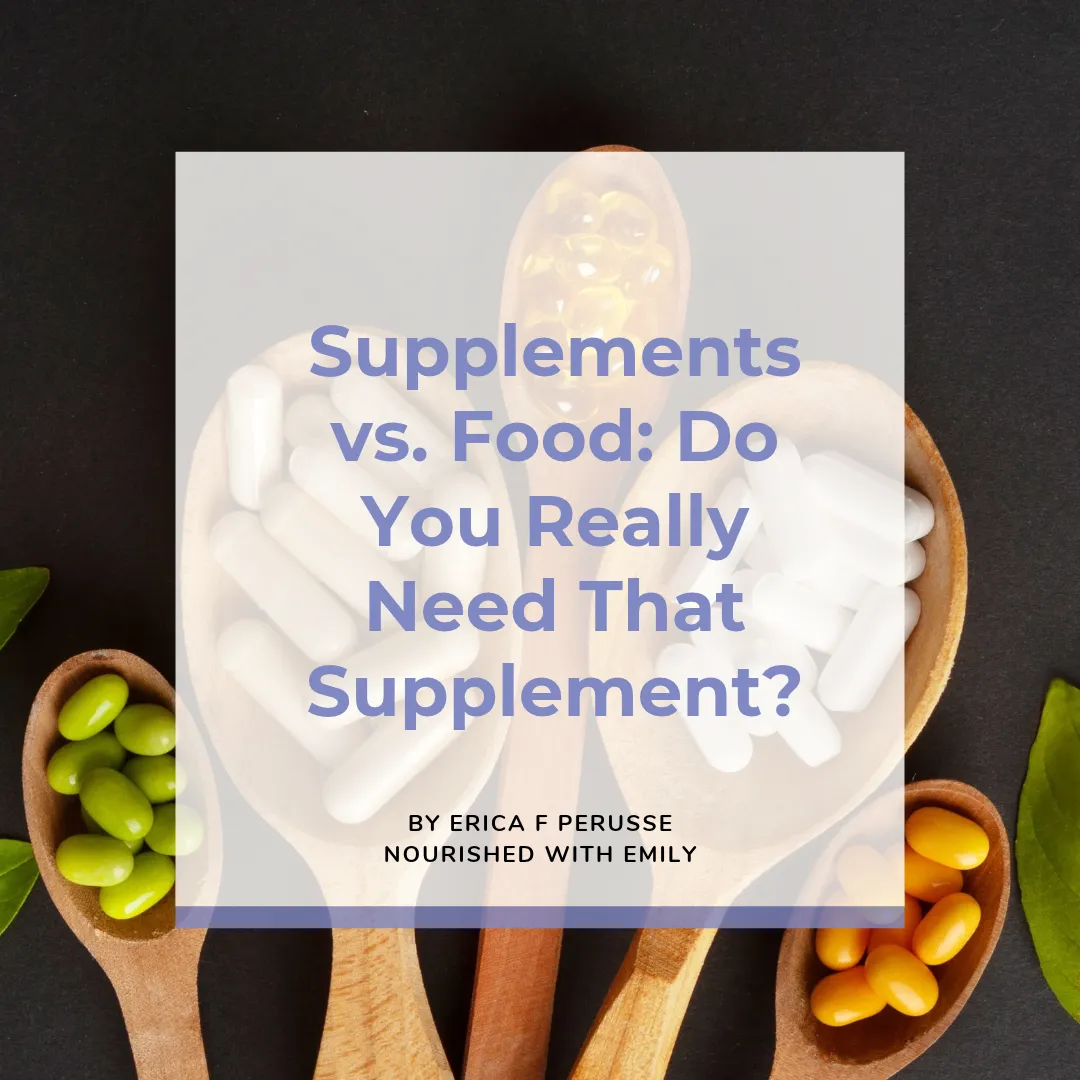
Supplements vs. Food: Do You Really Need That Supplement?
Whole foods first. Supplements with a purpose. Expert guidance to help you make sense of it all.
By Erica F Perusse, MS
Have you ever bought a supplement because someone you know or a person on social media called it a game-changer? Whether it's magnesium to relax, vitamin D for immunity, or a greens powder for extra veggies, it's easy to add another bottle to your cart and ask later: Do I actually need this?
With endless products promising better energy, sleep, or digestion, it's hard to know what's worth your money. A supplement can be vital for one person and completely unnecessary for another. At Nourished with Emily, we bring together practical education and health expert guidance to help you make nutrition choices with confidence.
Start With Food First, Not Another Bottle
When it comes to good nutrition, whole food does the heavy lifting. A simple meal of chicken, roasted potatoes, and veggies provides protein, carbs, healthy fats, vitamins, and minerals that no single pill can replace. Healthy eating doesn't have to be fancy or perfect either. The goal is simply to eat enough, enjoy variety, and nourish your body.
Before adding a new product, look at your daily habits:
Are you skipping breakfast or rushing through lunch?
Are you running on coffee and snacks until dinner?
Supplements can help fill certain gaps, but they can't replace the foundation of eating well and getting enough food.
Often, the most effective change isn't a new supplement. It's making time for regular meals and keeping nourishing snacks on hand. Supplements fill gaps, but they can't replace the foundation of eating enough food.
When Are Supplements Necessary?
A food-first approach doesn't mean supplements are bad. They play an important role when:
You have a diagnosed nutrient deficiency.
Your nutritional needs change during pregnancy or specific life stages.
You follow a restrictive diet or have a health condition that impairs nutrient absorption.
In those situations, a supplement may be a useful part of your nutrition plan. The key is understanding why you're taking it.
Rather than asking, "What's everyone taking right now?" try asking, "Is this something I actually need?" That small change can make a big difference in how you approach your health—and how you spend your money.
Let's look at a few common supplements.
Iron: Fatigue has many causes. Unless a doctor confirms an iron deficiency, taking extra iron isn't recommended as high levels can be harmful.
Calcium: Many people get enough through dairy, fortified plant milks, tofu, and leafy greens. Supplement only if your diet variety is limited.
Vitamin D: Hard to get from diet and sun alone; supplementation is frequently beneficial, but doses should be tailored to your health status.
Magnesium: Found in nuts, seeds, and whole grains. Helpful for specific concerns, but not universally required.
Collagen: Popular for skin and joints, but evidence is mixed. It doesn't replace adequate dietary protein.
Greens Powders: Convenient for vitamins, but missing the fiber and synergistic benefits of eating whole vegetables.
The NIH Office of Dietary Supplements is a great evidence-based resource! You can look up a specific nutrient to learn which foods contain it, how much you need, what it does in your body, and what to know about supplements and safety. National Institutes of Health Office of Dietary Supplements
Questions to Ask Before You Buy
Why am I taking this? Can you name the specific health goal or concern you're addressing?
Can I get enough through food? Your diet may already meet this requirement.
Is there solid evidence? Look beyond social media trends and testimonials.
Is it safe for me? Check for interactions with medications or overlapping ingredients in other supplements.
Is it quality tested? Choose reputable brands with third-party testing.
Have I consulted a professional? A registered dietitian or physician can help you evaluate your true needs.
Can I get enough through food? Depending on the nutrient, your diet may already provide what you need.
Is there evidence it works? Look beyond testimonials and social media trends.
Is it safe for me? Supplements can interact with medications, affect certain health conditions, or provide too much of a nutrient when combined with other products.
Am I taking more than one product with the same ingredients? Multivitamins, individual vitamins, and other supplements can overlap.
Have I talked with someone qualified to help? A registered dietitian, pharmacist, or other healthcare professional can help you determine whether a supplement is appropriate for your circumstances.
Still Not Feeling Your Best?
If your supplement cabinet is crowded but you're still feeling sluggish or unsatisfied, zoom out. Instead of adding another bottle, focus on your foundation: are you eating regular, balanced meals with protein, veggies, and whole grains?
You Don't Have to Figure It Out Alone
With so much conflicting nutrition advice, knowing what to believe is tough. At Nourished with Emily, we help you cut through the noise with evidence-based education and personalized support
Want Help Making Sense of Your Nutrition?
Taking care of your health shouldn't mean chasing every trend. We offer two ways to help you create a plan that fits your life:
The Nourished Membership: Offers practical nutrition resources, evidence-informed education, and access to dietitian guidance.
One-on-One Coaching: Provides personalized support to address your individual habits, health concerns, and goals.
And if you're looking for more personalized guidance, one-on-one coaching may help you take a closer look at your eating habits, identify areas where you could use support, and explore next steps with a qualified professional.
Explore the Nourished Membership today to start making nutrition work for real life!
