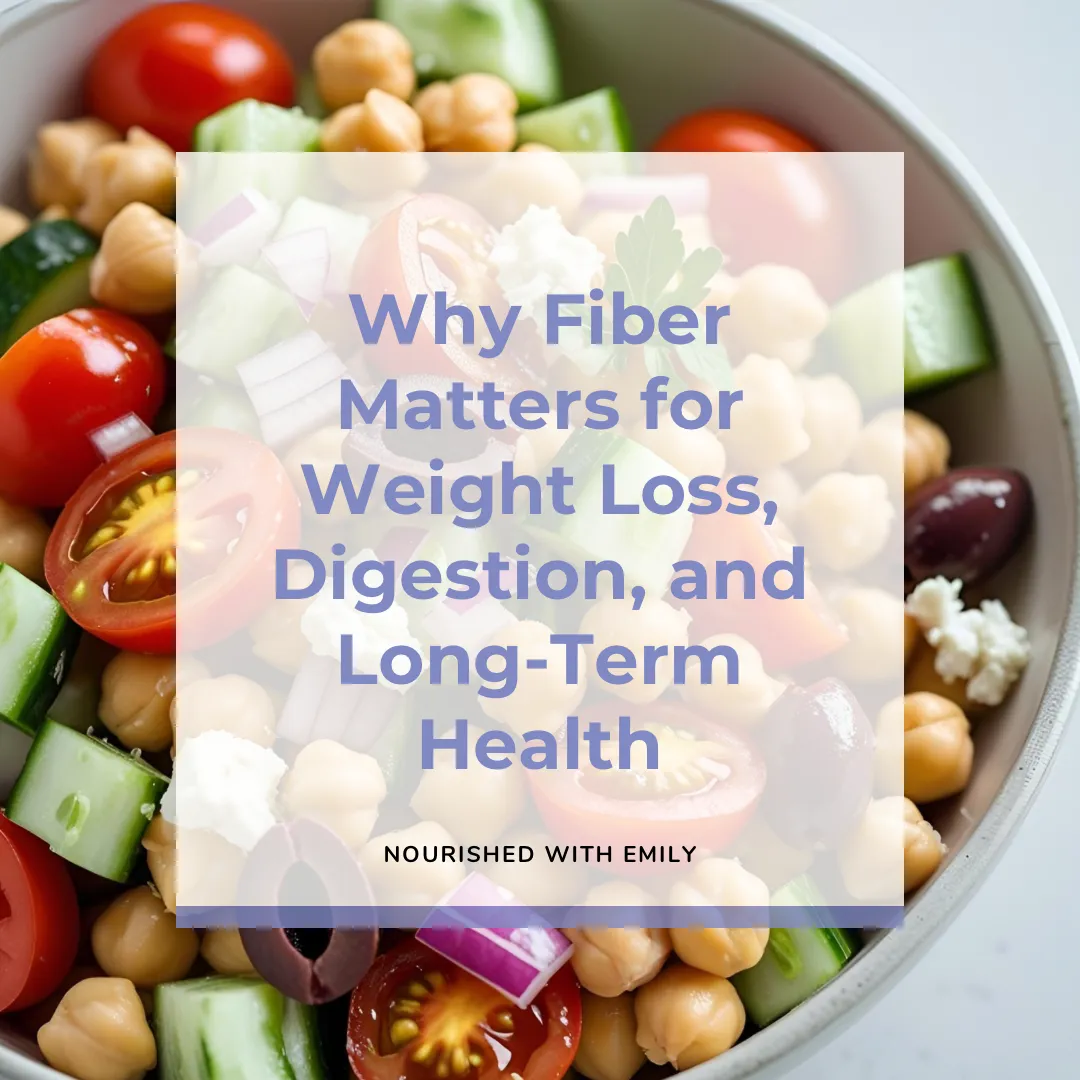
Why Fiber Matters for Weight Loss, Digestion, and Long-Term Health
Fiber is the nutrient most women are missing, and it deserves a seat at the table right next to protein.
Protein has dominated the nutrition conversation for the last few years. Protein shakes, protein bars, protein coffee. As a Registered Dietitian, I love protein, and it is the first piece of our PCC (Protein, Carb, Color) plate for a good reason.
But when I look at what my clients actually eat, the bigger gap is almost always fiber. Most women are getting about half of what they need, and that gap shows up in hunger, digestion, energy, and long-term health.
The good news: fiber is an "add this in" nutrient. You don't have to cut a single thing out to get more of it. That's the kind of nutrition we're all about: eating what you'd like and adding what you need.
What Is Fiber and How Much Do You Need?
Fiber is the part of plant foods your body can't fully digest, and that is exactly what makes it so useful. It travels through your digestive system and does a lot of work along the way.
There are two main types, and you want both:
Soluble fiber dissolves in water and forms a gel. It helps slow digestion, supports steadier blood sugar, and helps lower LDL ("bad") cholesterol. Think oats, beans, lentils, chia, apples, and citrus.
Insoluble fiber adds bulk and helps keep things moving. Think whole grains, nuts, seeds, and the skins of fruits and veggies.
Most foods contain a mix of both, so you don't need to track types. Just eat a variety of plants.
General guidelines for adults are about 25 grams a day for women under 50 and about 21 grams for women over 50. Most adults land around 15 grams. If you've never thought about fiber before, that gap is a big opportunity.
Fiber and Weight Loss: Fuller, Longer, Without Restriction
Fiber supports weight loss by helping meals keep you satisfied, not by asking you to eat less. Here is how it works:
It slows digestion. Fiber, especially the soluble kind, helps food leave your stomach more gradually, so fullness lasts longer.
It adds volume without a lot of calories. A bowl of lentil soup or a plate loaded with veggies fills you up in a way a low-fiber snack never will.
It supports steadier blood sugar. Fewer sharp spikes and dips can mean fewer sudden cravings and less of the 3 p.m. snack emergency.
It feeds your gut bacteria. These bacteria turn fiber into compounds that play a role in appetite and metabolism, and researchers are still learning how much.
Here is why this matters for the way most people try to lose weight. Many plans focus on eating less, cutting carbs, or white-knuckling through hunger. Fiber works the opposite way. It helps you feel satisfied on a meal that actually has food in it.
It is not a magic fix, and no single nutrient is. But when protein and fiber show up together at meals, you get the combination that keeps most people full and feeling in control. That is the heart of the PCC plate: a Protein, a Carb (ideally a fiber-rich one), and Color from fruits and veggies.
Fiber and Digestion: Regularity Is a Real Health Topic
Fiber is one of the most effective everyday tools for regular, comfortable digestion. Insoluble fiber adds bulk, soluble fiber helps keep stool soft, and together they make things move more easily.
Fiber also feeds the trillions of bacteria in your gut. When those bacteria ferment fiber, they produce short-chain fatty acids, which help nourish the cells lining your colon. A varied, fiber-rich diet is linked to a more diverse gut microbiome, and diversity is generally a good sign.
If you are taking a GLP-1 medication, this matters even more. Constipation is a common side effect, and eating enough fiber alongside plenty of fluids is one of the first things I look at with clients.
One important note: if you jump from 12 grams to 35 grams overnight, your gut will let you know. Add fiber gradually, one new source at a time, and drink more water as you go. If you have a digestive condition like IBS or IBD, work with your healthcare team to find the right types and amounts for you.
Fiber and Long-Term Health: The Disease Prevention Piece
Higher fiber intake is consistently linked to lower risk of the chronic diseases many women worry about as they move through midlife and beyond. A large 2019 review published in The Lancet found that people eating the most fiber had meaningfully lower rates of heart disease, type 2 diabetes, colorectal cancer, and early death compared with those eating the least.
Here is what is happening behind the scenes:
Heart health: Soluble fiber helps lower LDL cholesterol, and fiber-rich diets are linked to better blood pressure.
Blood sugar: Slower digestion means a gentler rise in blood sugar after meals, which supports long-term insulin sensitivity.
Colon health: Fiber helps move waste through the colon and nourishes the gut lining.
Inflammation: Fiber-rich eating patterns are linked to lower markers of inflammation.
These are associations from population research, so fiber is not a guarantee against any disease. But the pattern is strong and consistent, and the effort required is small. Few nutrition habits offer this much return for something as simple as adding beans, oats, or an extra serving of produce.
7 Realistic Ways to Eat More Fiber
You do not need a new diet to eat more fiber, just a few small upgrades to meals you already eat. Here are seven that fit into a busy week.
Build your plate with PCC. Make sure each meal has a Protein, a Carb, and Color. Choosing a fiber-rich carb (oats, beans, quinoa, whole grain bread, potatoes with the skin) and adding veggies or fruit moves you toward your goal quickly.
Use frozen and canned. Frozen veggies, frozen berries, canned beans, and bagged salad count just as much. Convenience is not cheating.
Stir beans and lentils into things you already make. Soups, pasta sauce, tacos, chili, grain bowls, even scrambled eggs. Rinse canned beans to make them easier on your stomach.
Keep the skin on. Apples, pears, potatoes, and cucumbers all carry more fiber when you leave the peel.
Pair your snacks. A protein plus a fiber keeps you full: apple with peanut butter, hummus with veggies, edamame, chia pudding, or popcorn with a handful of nuts.
Upgrade one carb, not all of them. Try oatmeal instead of a pastry a few mornings, or whole grain bread for your sandwich. Keep the foods you love in the mix.
Sprinkle in seeds. Chia, ground flax, and hemp seeds blend into yogurt, oatmeal, smoothies, and salads with almost no effort.
Pick one or two of these this week, not all seven. Small changes you repeat beat big changes you abandon by Thursday.
Common Fiber Questions
How much fiber should I eat per day? A general target is about 25 grams a day for women under 50 and about 21 grams for women over 50. Your own needs can vary, so it is worth talking with a dietitian if you have a health condition.
Can I get enough fiber without supplements? For most people, yes. Food comes with vitamins, minerals, and plant compounds that a supplement does not. A fiber supplement can be a useful tool in some cases, but food is the best place to start.
Why do I get bloated when I eat more fiber? Your gut needs time to adjust. Increase fiber slowly, add one new source at a time, and drink enough fluids. Most people feel better within a couple of weeks.
Is fiber really helpful for weight loss?It can be a helpful piece. Fiber supports fullness and steadier blood sugar, which makes it easier to eat in a way that feels sustainable. It works best alongside protein, regular meals, and the foods you enjoy.
What are the best high-fiber foods? Beans, lentils, chickpeas, oats, chia seeds, berries, pears, apples with the skin, avocado, broccoli, Brussels sprouts, whole grains, nuts, and popcorn are all great options.
Make Fiber Part of Your Plate, With Support
Fiber supports weight management, digestion, and long-term health, and you can get more of it without giving up the foods you love. Protein is important, and so is fiber. Together, they make meals that satisfy.
Knowing what to do is rarely the hard part. Doing it consistently, on a busy week, without turning it into another thing to stress about, is where most people get stuck.
That is exactly whatThe Nourished Membership is for. You get ongoing guidance, community, and practical tools to build habits that last, with no diet rules and no guilt. We will help you build plates with the protein, the fiber, and the foods you actually enjoy.
$29 a month. No minimum commitment. Cancel anytime.